

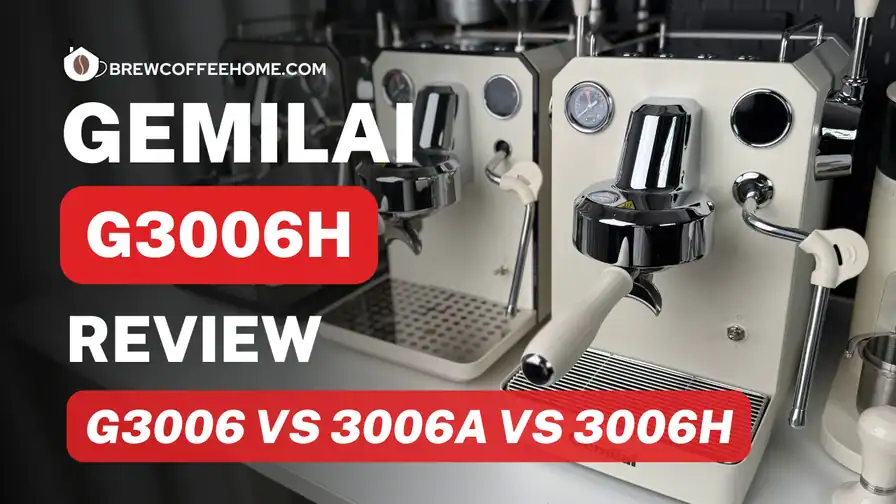
I’ve had all three Gemilai Owl machines on my counter—the original G3006, the G3006A, and now the G3006H—and the H is the only one that can brew and steam at the same time.
Quick Verdict
The Gemilai Owl G3006H is the best choice in the Owl lineup for people who make a lot of lattes and cappuccinos at home. It’s still compact, it heats up fast, and you can brew and steam at the same time without juggling modes.
Ready to check the latest price for the Gemilai Owl G3006H?
Check Latest PriceAffiliate link. If you buy through this link, I may earn a commission at no extra cost to you.
Here’s my hands on review of the Gemilai Owl G3006H on my YouTube channel.
Key points:
- Best for: milk‑drink households, workflow‑focused home baristas.
- Key upgrades: dual thermoblocks, dual pumps, stronger steam, all‑metal body, larger drip tray.
- Trade‑offs: high‑power 16 A version so availability depends on your region.
If you mainly drink straight espresso or are excited about cold brew, the G3006A still makes more sense. If you just want the cheapest way into a 58 mm Owl, the original G3006 remains a great starting point.
Quick Technical Facts
- Group: 58 mm commercial‑style brew group with PTC heating.
- Heating: Dual thermoblocks (one for coffee, one for steam) plus dual pumps.
- Power: Around 3000–3600 W, 16 A high‑power version.
- Temperature range: 80–102 °C adjustable on the LCD.
- Warm‑up: About 1 minute for the display to hit 93 °C; roughly 5 minutes for the metal group to fully stabilize.
- Measured brew temp: About 88 °C inside the basket after ~5 minutes, staying stable through extraction.
- Dimensions: Roughly 40 cm deep, 42 cm high to the steam lever, 22 cm wide.
- Water tank: About 1.7 L at the back.
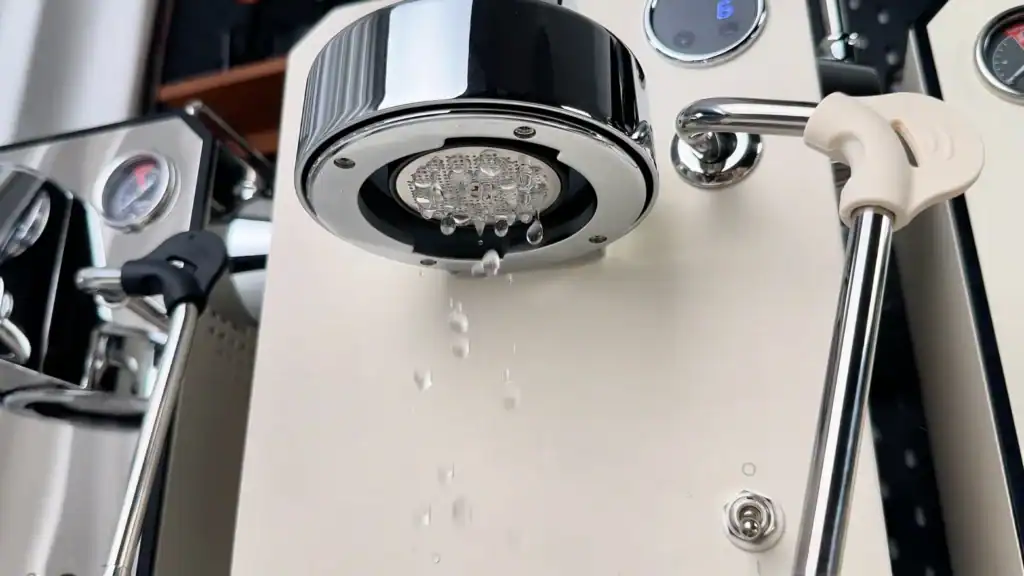
- Steam wand: Extra‑long wand with a 2‑hole tip and side lever control.
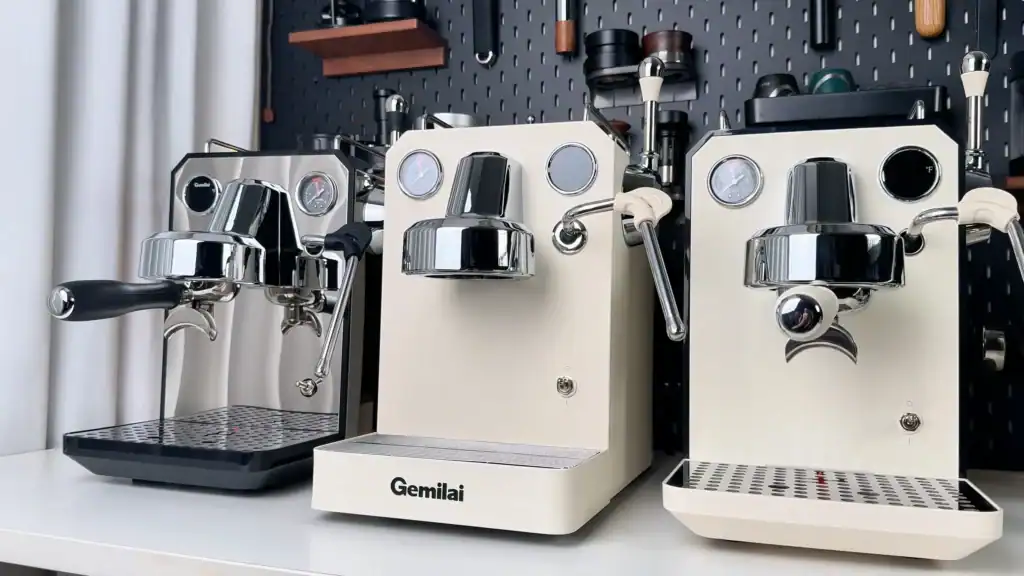
G3006 vs G3006A vs G3006H: At a Glance
| Question | G3006 (original) | G3006A | G3006H (this review) |
|---|---|---|---|
| Heating / pumps | Single thermoblock, single pump | Single thermoblock, single pump | Dual thermoblocks, dual pumps (brew + steam) |
| Brew & steam together? | No | No | Yes – true simultaneous brew & steam |
| Pre‑infusion | Basic, drip & pause | P1 wetting + P2 pause system | P1 wetting + P2 pause system |
| Cold brew mode | No | Yes – built‑in cold brew | No |
| Body / build | Metal body, plastic lower section | Similar construction to G3006 | All‑metal body, including bottom |
| Drip tray | Smaller, fills faster | Similar to original | Larger, Whale‑style tray with pressure outlet |
| Best for | Budget 58 mm espresso | Quality Espresso & Cold brew fans | Milk‑drink households, workflow‑focused users |
Accessories and Setup
Gemilai kept the accessories consistent across the Owl series. In the G3006H box you’ll find:
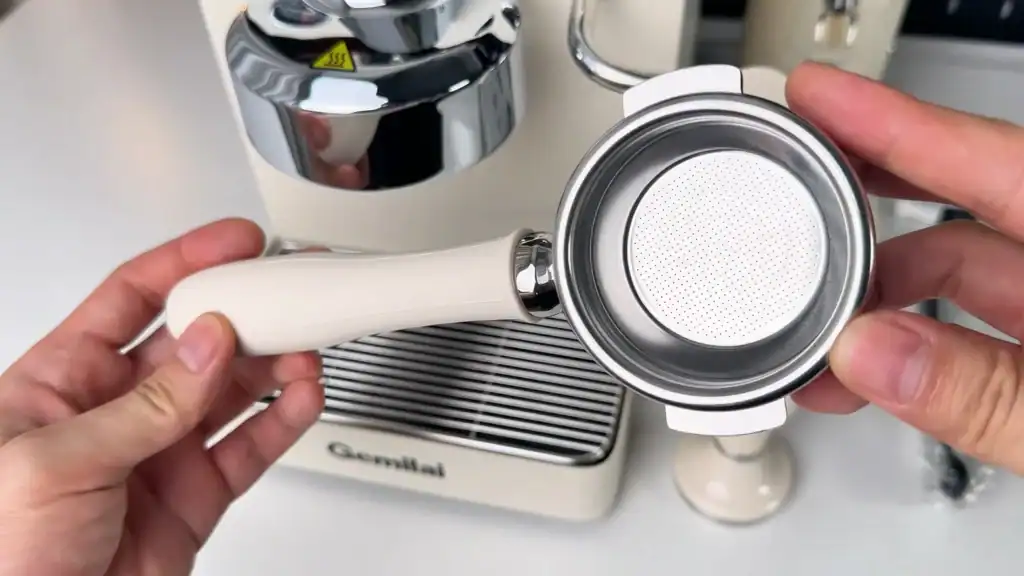
- 58 mm spouted portafilter with a double‑shot non‑pressurized basket
- Single‑shot basket
- Stainless‑steel base tamper
- Cleaning disc
- Screwdriver
- Cleaning brush
It’s a simple kit, but because everything is standard 58 mm, it’s easy to add a bottomless portafilter, precision baskets, or a different tamper later without being locked into proprietary parts.
Design and Build: The Most “Grown‑Up” Owl
On the counter, the G3006H still looks like an Owl, but it feels more serious once you’ve lived with it.
The whole body, including the bottom, is metal. Earlier Owls used plastic for the lower section, so the H version immediately feels more solid when you move it or look underneath. The front frame is fully metal too, instead of the plastic‑framed panel on the original and A versions.
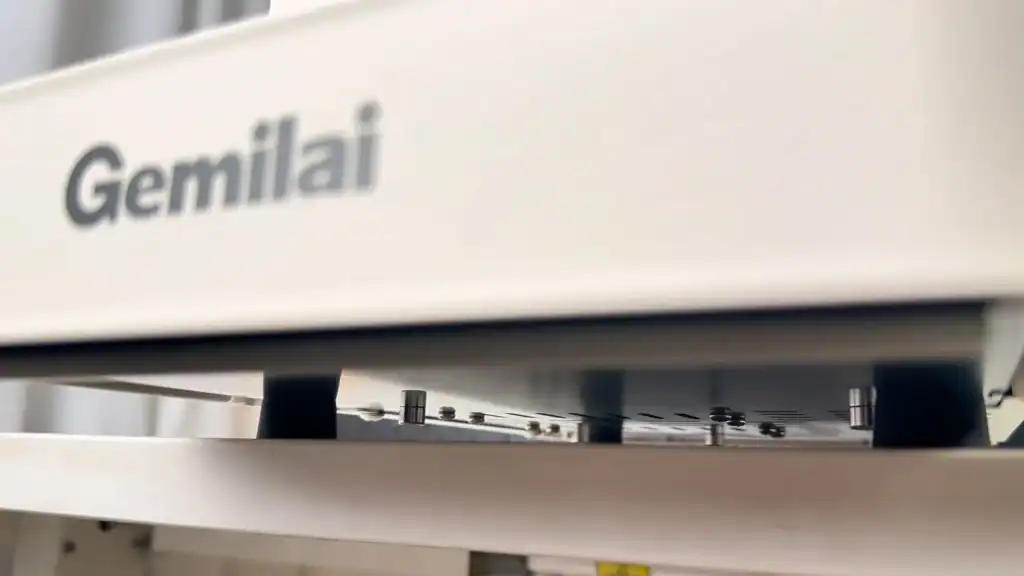
On the sides, those patterned panels you see in product photos turn out to be real cut‑outs. They’re not just decoration—they act as vents, which makes sense with two thermoblocks running inside.
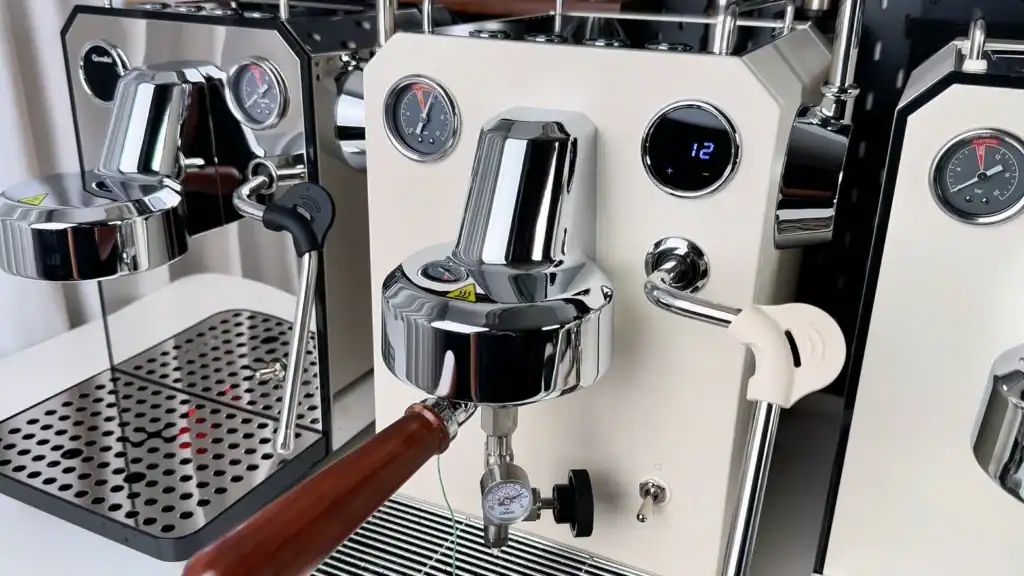
The drip tray is a clear upgrade. It’s larger, more like the tray on the Gemilai Whale G3038A, and has a pressure‑relief outlet at the bottom to take water from the OPV. In everyday use, that simply means fewer trips to empty the tray.
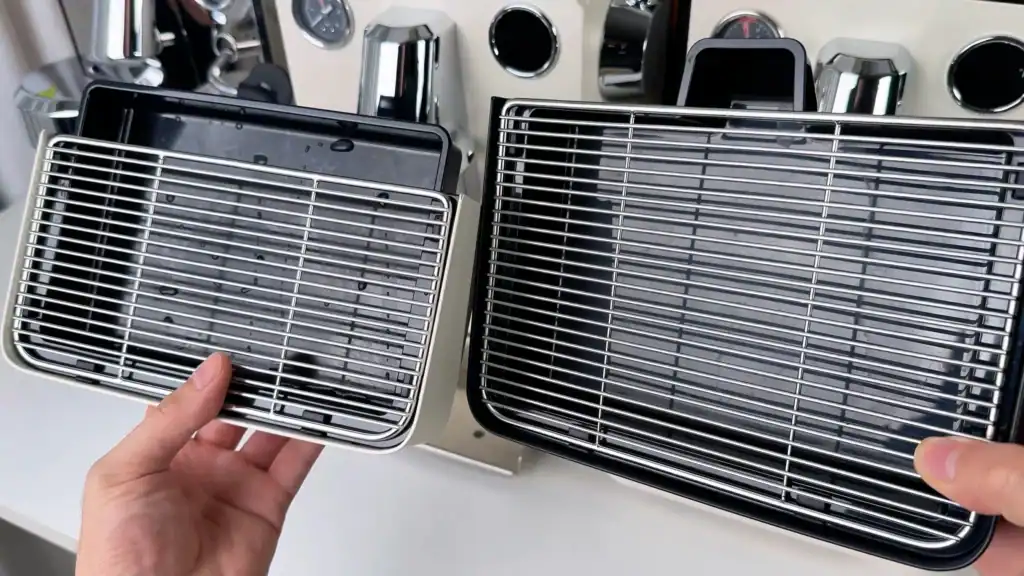
Despite the extra hardware, the machine still fits easily on a normal kitchen counter. Depth and height go up a bit compared to the G3006 and G3006A, but width stays about the same, and the center of gravity sits toward the back so you can let it hang slightly forward on narrow counters.
Controls and Pre‑Infusion: Familiar but More Capable
If you’ve used the other Owl machines, you’ll feel at home on top of the G3006H.
You still get:
- Two programmable auto shot buttons
- One manual shot button
- Descale button
- Front LCD for temperature and settings
- Pressure gauge
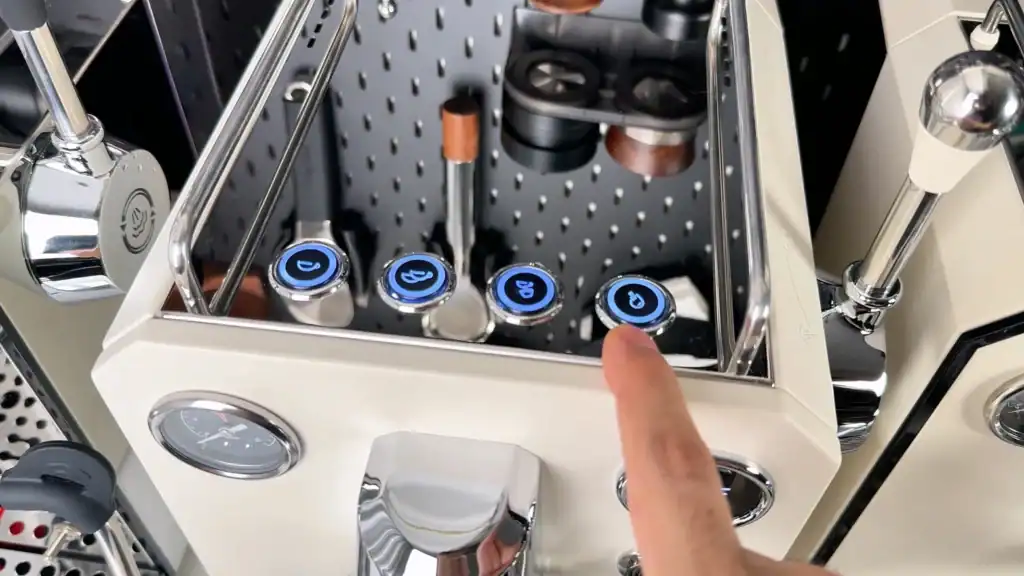
Programming an auto shot is simple: hold the button for three seconds, start the shot, then stop it at the time you want and the machine saves that profile. The manual button is just start/stop.
One change you’ll notice immediately is the missing steam button. Because the H has a dedicated steam thermoblock and pump, there’s no need to switch into “steam mode”. You control steam entirely via the side lever; where the steam button used to be, there’s now a descale button to match the more powerful plumbing.
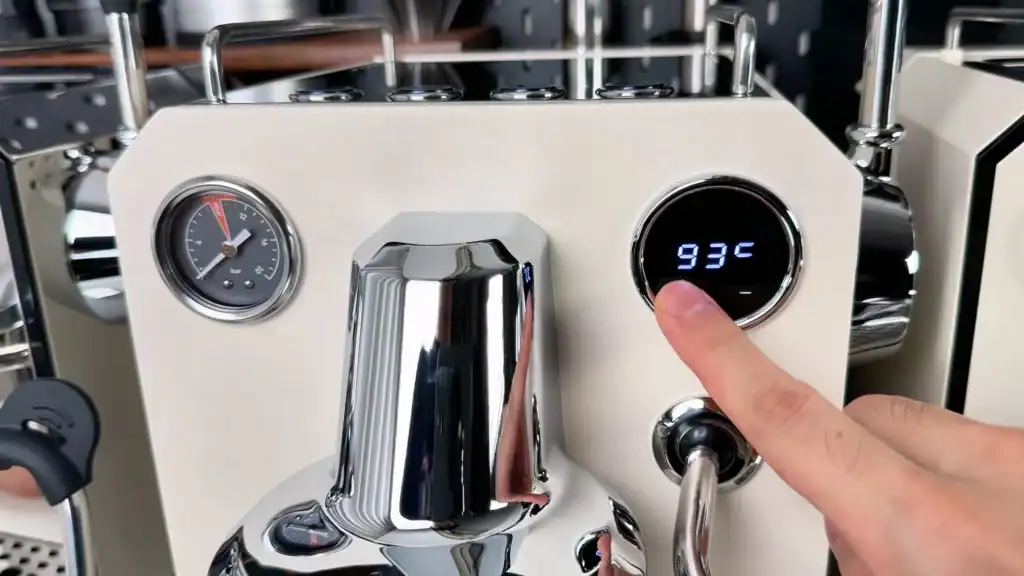
Temperature adjustment lives behind a long press of the plus button on the LCD. With a range from 80 to 102 °C, there’s enough flexibility to push lighter roasts hotter and keep darker roasts a bit cooler.
For pre‑infusion, the G3006H uses the same P1 / P2 logic introduced on the A version:
- P1 controls low‑pressure pre‑wetting time (0–10 seconds).
- P2 controls the pause afterward, usually set around 2–4 seconds.
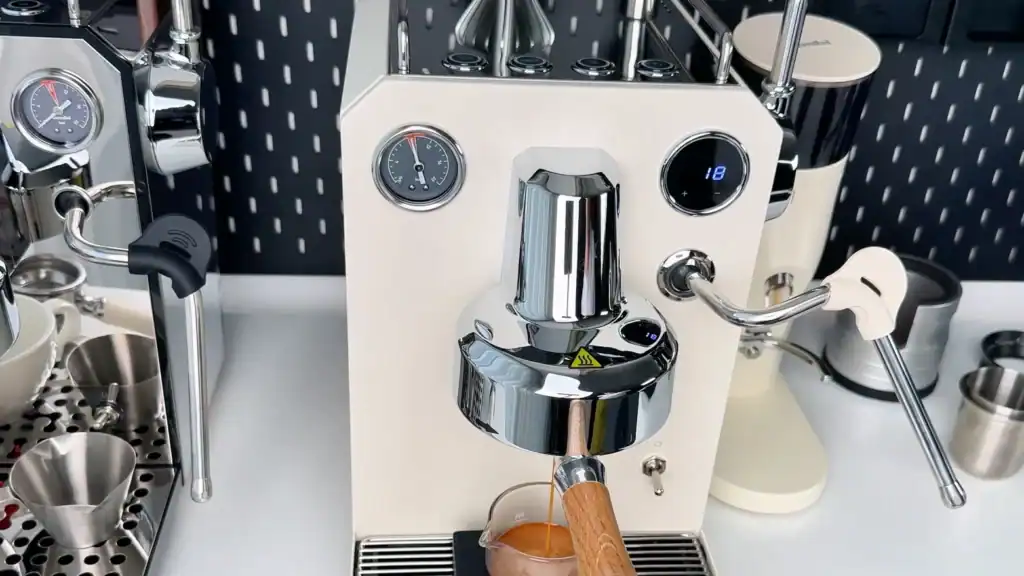
In practice, a setting like 4 seconds P1 and a short P2 gives the puck time to fully saturate before full pressure ramps up. You can clearly see this with a bottomless portafilter—the coffee appears evenly across the basket instead of shooting from one point.
The only downside is that P1 / P2 only works with the auto buttons. If you prefer brewing manually, that pre‑infusion logic doesn’t apply. Of course, you can set the auto brewing time longer, so you can manually stop the extraction while using pre-infusion without a problem.
Warm‑Up and Temperature Stability
In daily use, the G3006H’s dual‑thermoblock design shows up most clearly in how fast it’s ready to brew.
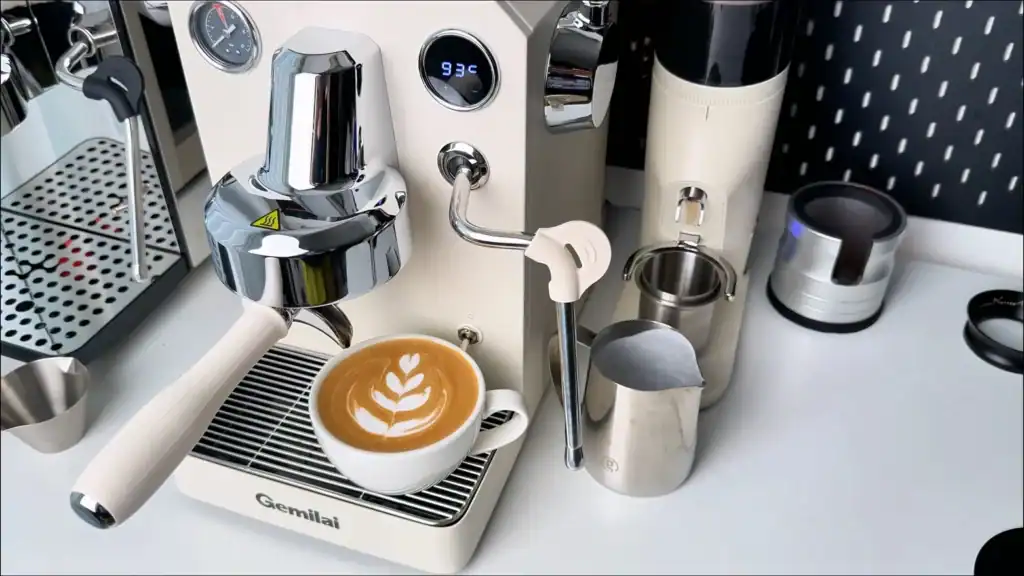
From a cold start, the display hits a brew target like 93 °C in about one minute. By that time, water from the group is already hot. The metal group head, which has its own PTC heating, still benefits from a few extra minutes of soak, and around five minutes total gives the best stability.
In my test, with a thermometer in the basket, water sits around 88 °C after roughly five minutes and stays steady during extraction instead of drifting. You still get the quick responsiveness of a thermoblock, but the combination of dual blocks and a heated metal group makes it behave more like a calmer, small boiler system than a typical entry‑level thermoblock.
Pump, Pressure, and What’s Inside
Pressure tuning on the G3006H follows the same logic as on the G3006A. With a blind basket, the pump will rise toward about 12 bar, but with a normal shot and sensible flow rate, brew pressure settles close to 9 bar, which is where most people want it for everyday espresso.
Opening the machine shows a more complex but also more thoughtful internal layout:
- Two separate thermoblocks: one for coffee, one for steam.
- Two vibration pumps, each dedicated to its own thermoblock.
- A coffee solenoid valve.
- A simple pressure‑limiting valve plus a solid copper OPV.
- Labeled tubing so you can easily see what each line does.
The OPV sends excess water back to the tank, and the other line heads into the coffee thermoblock.
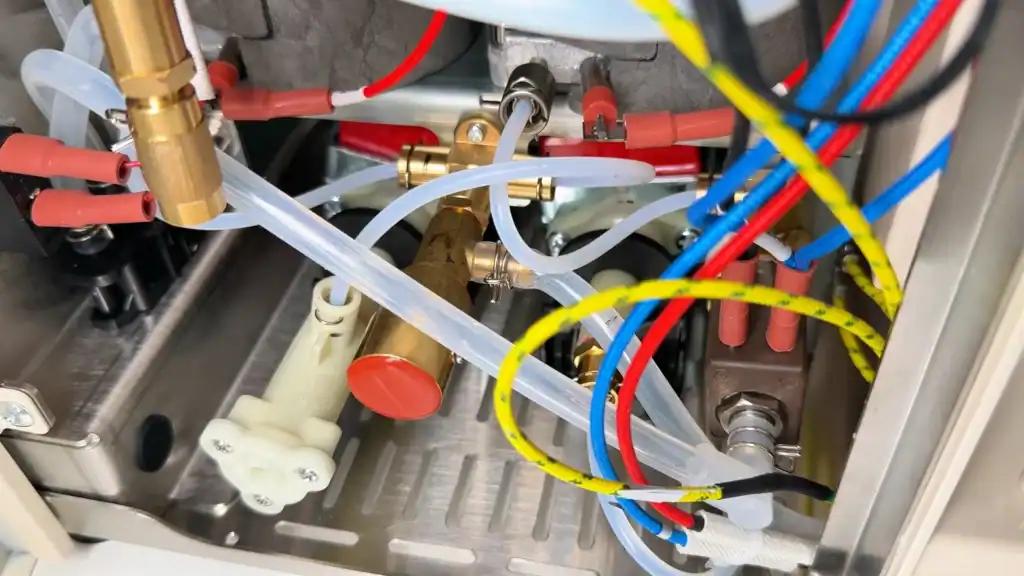
Those labels sound like a small touch, but they make it much easier to understand the flow paths and service the machine later.
Milk Steaming and Workflow: Why the H Version Exists
For me, the G3006H is all about milk drinks.
With dual thermoblocks and dual pumps, you can steam and brew at the same time. My typical latte workflow with the Gemilai Molight grinder looks like this:
- Grind 18 g of coffee at around settings 5–6 into a dosing cup.
- Prep the puck and lock in the 58 mm portafilter.
- Pour about 200 ml of cold milk into a 400 ml pitcher.
- Purge the steam wand, set the angle, and pull down the lever to start steaming.
- Stretch the milk for 3–5 seconds, lower the tip for a smooth vortex.
- Hit the shot button while finishing the milk.
Steam power is strong for a compact home machine. Milk for a single latte is usually finished in about 30–40 seconds, and the espresso shot wraps up at roughly the same time. There’s no frustrating gap where your milk is ready but the machine is still switching modes or recovering for brewing.
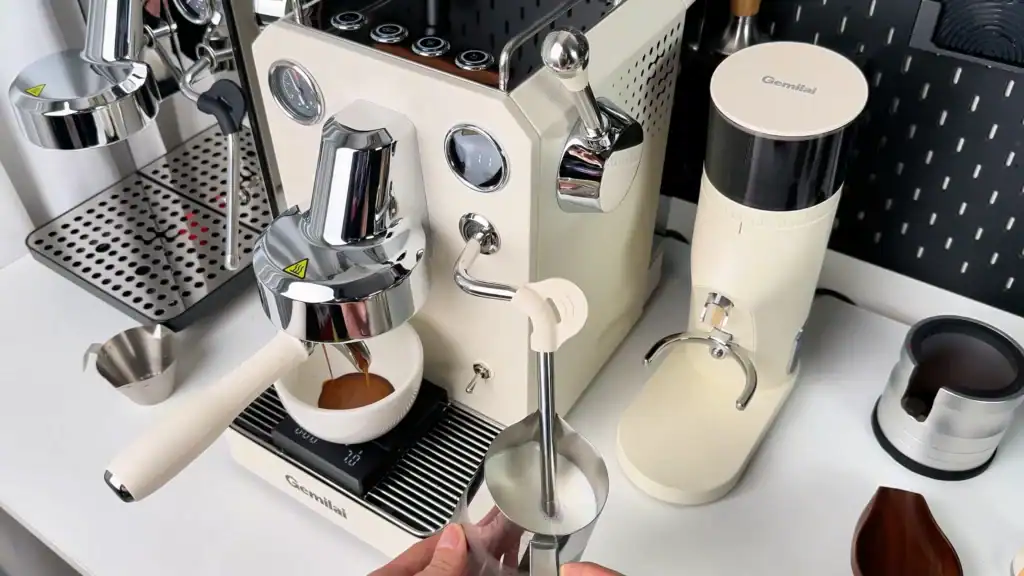
The extra‑long wand and easy‑to‑adjust angle make it simple to work with different pitcher sizes. As long as you wipe the wand immediately and give it a quick purge after steaming, keeping it clean is straightforward.
If your daily routine is mostly lattes and cappuccinos, this synchronized “shot and milk finish together” feeling is exactly why the H version exists—and why it feels like a mini dual‑boiler even though it’s technically a dual‑thermoblock.
Espresso Shots and Bottomless Portafilters
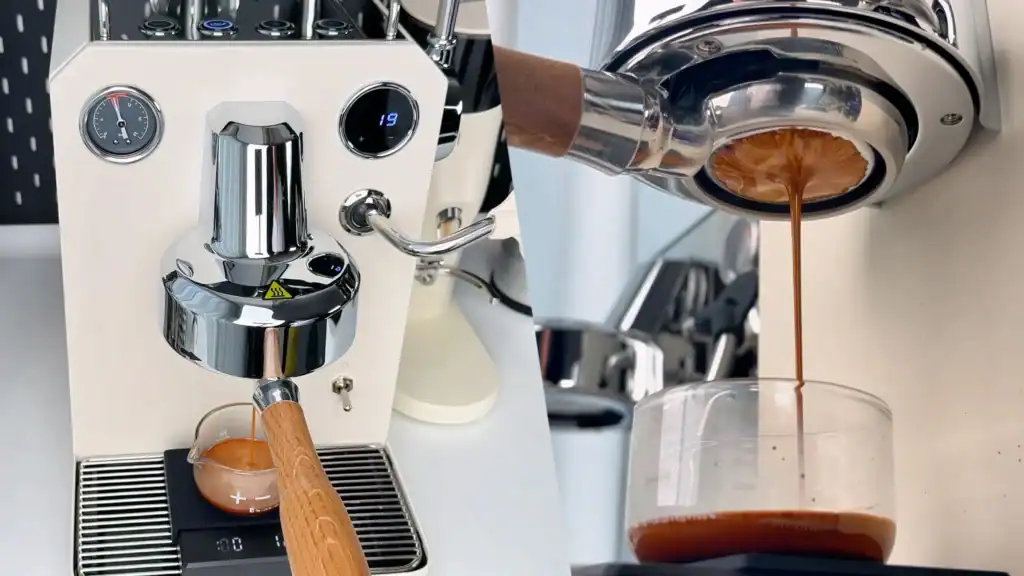
Because the G3006H uses a 58 mm commercial‑style group, it works with standard E61‑style bottomless portafilters. That makes it easy to see how well the pre‑infusion and puck prep are working.
With an 18 g dose, the Molight set around 5–6, and a 4 second P1 / short P2 profile, I found that:
- The puck saturates evenly before the main flow begins.
- Extractions stay calm through a bottomless portafilter, with minimal spraying when distribution and tamp are consistent.
- Brew pressure tracks close to 9 bar in practice once you dial in the grind.
The taste profile is more balanced than punchy—pleasant and easy to drink with fresh beans, especially for everyday use. The machine doesn’t magically make better coffee than the other Owls, but it does make it much easier to be consistent once you’ve dialed in a recipe that works for you.
Day‑to‑Day Use and Maintenance
Day‑to‑day, the G3006H feels straightforward once you’ve set your temperature and pre‑infusion preferences. The things you notice most are:
- The fast warm‑up and quick recovery. You don’t feel like you’re waiting on the machine.
- The larger drip tray and full metal body, which make it feel ready for regular use, not just occasional weekend shots.
- The dual‑block design that avoids the common “milk ready, coffee not” timing problem.
Maintenance follows the usual pattern for a 58 mm home machine: purge and wipe the steam wand after every use, backflush with the cleaning disc occasionally, and descale on a reasonable schedule based on your water. The bigger tray still needs to be emptied, just not as often as on the smaller models.
G3006 vs G3006A vs G3006H: Who Should Buy What?
After using all three Owls, here’s the simplest way I’d break it down.
Gemilai Owl G3006 (original)
- Single thermoblock and pump, smaller tray, partial plastic body.
- Best if you want the Owl look and a 58 mm platform at the lowest price and don’t mind brewing and steaming separately.
Gemilai Owl G3006A
- Adds P1 / P2 pre‑infusion and a built‑in cold brew mode.
- Best if you’re genuinely excited about cold brew and like playing with profiles more than you care about simultaneous steaming.
Gemilai Owl G3006H
- Dual thermoblocks and pumps, all‑metal body, larger tray, stronger steam.
- Best if your everyday drinks are mostly lattes and cappuccinos and you want “mini dual‑boiler” workflow without boiler warm‑up times.
